
Keeping Chickens – General Care & Advice
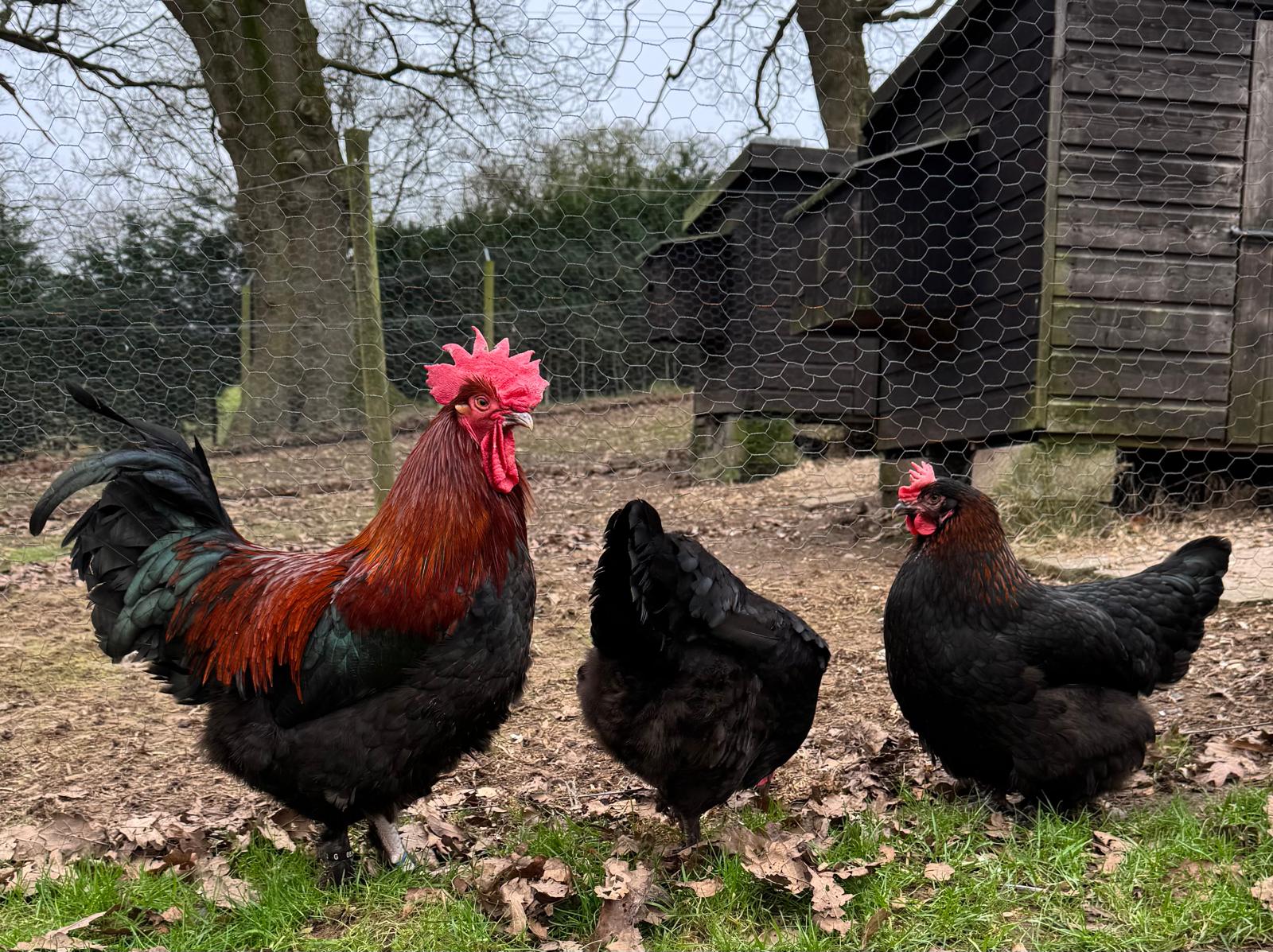
Food – Chickens are pretty omnivorous, I’ve even heard of one that specialised in catching mice, but it is very important for the chickens health to have a balanced diet. Unless you are very expert, the best way to achieve this is to base your chickens’ diet on one of the propriety pelleted feeds. This can be fed in conjunction with suitable grain such as corn or wheat, the consensus of opinion being to feed the pellets in the morning via a protected feeder (it’s important to keep the food dry), then the grain in the afternoon as a scatter food. Download Pamphlet pdf brochure.
Drink – It is important for the health of your chickens health to provide fresh, clean water which must be available during the daylight hours. This is best achieved by one of the propriety drinking fountains which keep a reserve of clean water which fills up a small trough, making it harder for the water to be fouled. If you lock your birds in at night, it is not necessary to make water available.
Grit – Hens need (flint) grit to grind food in their crop. Some will be included in a good quality food, but its a good idea to supply some in a suitable container.
Cleaning – The chicken house will need to be cleaned regularly, exactly how often depending on the density of birds and the time of year, but ideally once a week. The floor of the chicken house should be covered with sawdust, though this is a misnomer: it is very important that it should be dust-free wood shavings as chickens have delicate respiratory systems. Download Pamphlet pdf brochure.
Eggs – Hens don’t need a cockerel with them to lay eggs, only for fertile eggs. The rate of lay will depend on nutrition, contentment, age of the bird, day length and breed. 14 hours of daylight is the optimum day length, and commercial producers may use lights to provide a false dawn. Dusk should be gradual on welfare grounds, to allow chickens time to roost. Download Pamphlet pdf brochure.
General well being – Contented, busy chickens are much more likely to thrive and lay well. Chickens feed mainly by scratching the ground, then pecking (though it’s pretty amusing to watch them chase flies) so having an earth floor to the run, or a few inches of bark chippings or similar, will keep them occupied and happy. Another simple measure is to provide their greens hung up in a string bag or on a hook so they have to reach up to get at it. If possible, let them free range. With care, especially during the high summer through winter, a small number of chickens will not do much damage in a garden. On the contrary, they will eat up a lot of pests – they love slugs – spread some very fine manure, and be a pleasure to have around.
Keep an eye on your flock’s behaviour, droppings, food consumption: any bird that ‘goes quiet’, has a messy tail or loses feathers should be investigated. Take the time to watch your birds, just for the fun of it. Download Pamphlet pdf brochure.